Pre-Planned Holiday Displays: Benefits for Your Business
Pre-planned holiday displays increase seasonal revenue, improve employee morale, and multiply customer engagement — and animated lighting amplifies every one of those outcomes. When you commit to a display program 6–9 months ahead, you secure premium placement, avoid rush freight and labor premiums, and give your marketing team time to build campaigns around a show worth promoting. The difference between a static string-light arrangement and a music-synced animated display is not cosmetic; it is the difference between decoration and destination.
Top business benefits of pre-planning your holiday display:
-
Higher seasonal revenue — early planning locks premium placement before competitors and aligns displays with Black Friday and peak shopping windows
-
Reduced operational costs — no rush freight, no premium holiday labor rates, no compressed installation windows
-
Stronger employee morale — research published in the Journal of Environmental Psychology shows communal holiday decor supports sustained employee well-being
-
Greater foot traffic and dwell time — animated lighting turns a display into a destination that draws repeat visits
-
Shareable social moments — synchronized light shows generate organic social content your marketing team cannot buy
Table of Contents
-
What are the real business benefits of pre-planned holiday displays?
-
Why does brand consistency matter across multiple locations?
-
What the EZRGB team has learned from planning season after season
What are the real business benefits of pre-planned holiday displays?
Commercial designers call early planning “seasonal revenue readiness” — a shift in how you think about holiday decor, from seasonal obligation to revenue infrastructure. That framing changes the conversation with your finance team and your facilities crew.
Sales lift, foot traffic, and dwell time
Professional holiday lighting has produced measurable results across retail and dining. One Indianapolis case study recorded significant increases in foot traffic for a boutique and greater patio seating occupancy for a restaurant after professional installations. Animated lighting pushes those numbers further because it creates a reason to return. When you schedule new sequences or timed shows, guests come back to see what changed, which extends the season’s revenue window beyond a single visit.
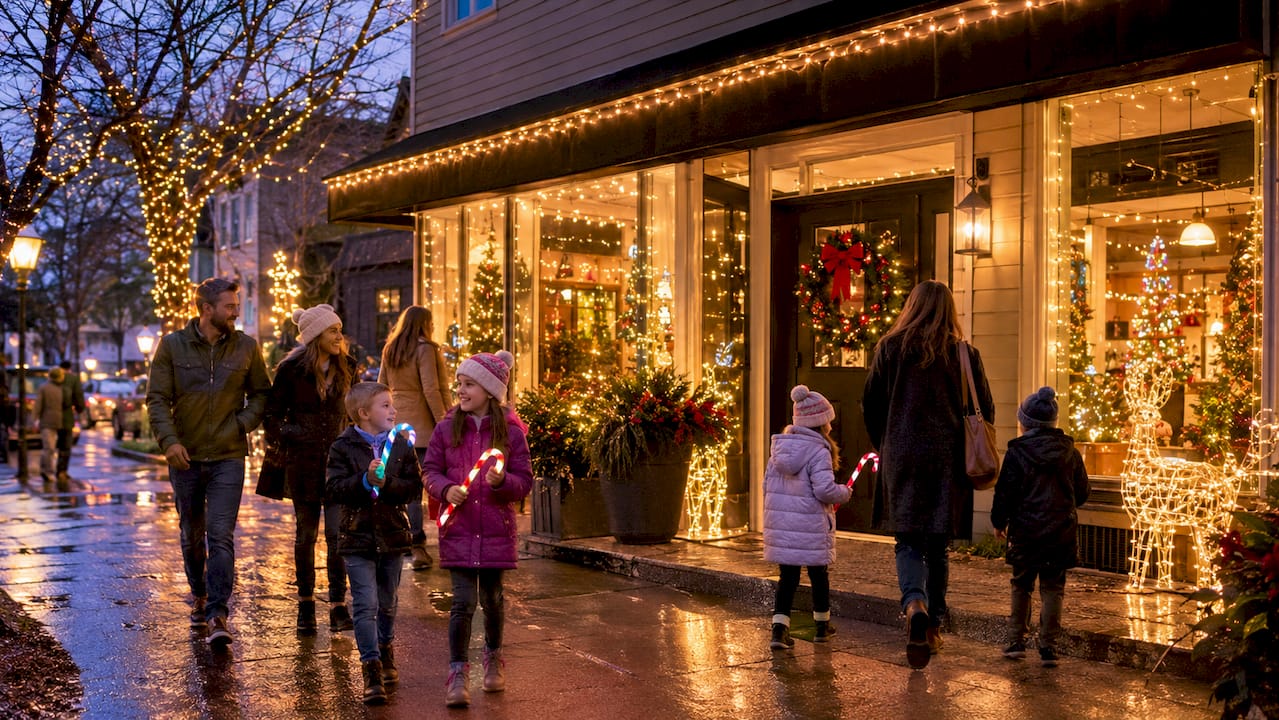
Animated lighting sequences and timed shows function as destination marketing. A static display is seen once; a show with rotating sequences becomes a local event. That distinction directly affects average transaction value, because shoppers who stay longer tend to spend more.
KPIs to track during the season:
-
Footfall count (week-over-week vs. prior year)
-
Average dwell time per visit
-
Conversion rate delta during display hours vs. non-display hours
-
Social tags, shares, and location check-ins
-
Event attendance if you schedule live show moments
-
Employee engagement survey scores
Pro Tip: Set your KPI baselines before the display goes live. Pull last year’s footfall and transaction data for the same weeks so you have a clean comparison when the season ends.
Employee morale and year-end culture
Academic studies cited by the Journal of Environmental Psychology show communal holiday decor supports increased sociability and sustained employee well-being compared with non-decorated environments. When displays are planned as a team activity and designed to be inclusive, they also serve as a year-end “shutdown ritual” that helps staff transition out of a demanding Q4. The key word is inclusive: displays that avoid exclusionary religious imagery and offer neutral seasonal themes tend to produce broader morale benefits across diverse teams.
How does early planning reduce operational risk and cost?
Most facility managers underestimate the hidden costs of late planning. Rush freight, premium holiday labor rates, and site-access bottlenecks can easily exceed the cost of the display hardware itself. Starting 6–9 months before installation eliminates most of those surprises.
Procurement and inventory
-
Secure limited-run, premium animated props before stock sells out
-
Negotiate standard freight rates instead of expedited shipping premiums
-
Confirm show-control compatibility (DMX512, BMS integration) and wiring diagrams before contract signature — catching incompatibilities at procurement avoids costly schedule failures later
-
Order spare components alongside primary hardware so replacements ship together
Labor and scheduling
-
Book installation crews at standard rates before holiday demand drives prices up
-
Sequence installations during non-peak hours to reduce shopper and tenant disruption
-
Avoid compressed windows that force crews to work nights or weekends at premium pay
Permits and AHJ approvals
Permit lead times and engineering deliverables are among the most commonly underestimated milestones. For public or large-scale installations, AHJ approvals and engineering drawings can take weeks or months. Starting early gives you time to submit drawings, respond to inspector comments, and still hit your target launch date without cutting creative corners.
-
Contact your local permit office to confirm requirements and typical review timelines
-
Engage a licensed electrician or structural engineer for any elevated or public-facing installation
-
Submit drawings with buffer time for at least one revision cycle
-
Confirm site access windows with property management before scheduling crews
Why does brand consistency matter across multiple locations?
A display that looks polished at your flagship location but inconsistent at three satellite sites sends a mixed message to customers who visit more than one. Early creative planning gives your design team time for multiple review rounds, which produces stronger, more distinctive displays rather than last-minute compromises.
Animated lighting makes consistency across locations far more manageable. Once you build a sequence template, you can deploy the same color themes, timing, and music sync across every site without reinstalling new hardware. Software updates through a platform like EZRGB’s EZPlayer let you push creative changes remotely, so a marketing refresh for a mid-season promotion reaches all locations simultaneously.
Design consistency checklist:
-
Use a layout designer to create a master template with approved prop placements and color palettes
-
Specify inclusive, neutral seasonal themes that welcome diverse staff and customers
-
Avoid imagery that could feel exclusionary to any segment of your workforce or customer base
-
Document prop SKUs and controller configurations so replacements match exactly
-
Schedule a mid-season creative refresh (new sequence, new color theme) to sustain interest
Pro Tip: Upload a photo of each location into EZRGB’s layout designer and build site-specific mockups from the same master template. Stakeholders can approve placement visually before a single prop ships, which cuts spec errors and speeds sign-off.
What does a practical planning timeline look like?
Starting design discussions early maximizes your creative options and gives you time to book equipment like cranes or lifts that get reserved months in advance. The table below maps a sample schedule for a November installation target.
| Phase | Timing (before install) | Key deliverables |
|---|---|---|
| Discovery and brief | 8–9 months | Goals, KPIs, budget approval, site survey |
| Creative mockups | 6–7 months | Layout designer renders, prop selection, brand sign-off |
| Procurement | 5–6 months | Hardware orders, freight booked, spare parts ordered |
| Permits and AHJ | 4–5 months | Drawings submitted, inspector engagement, approvals received |
| EZSequence programming | 1 month | Since this is automated we do the heavy lifting for you. |
| EZPlayer scheduling | 1 month | Show schedule built, songs synced, remote access tested |
| Installation and QA | 2–4 weeks | Crew on site, system tested, soft launch |
| Mid-season refresh | During season | New sequence or color theme pushed via EZPlayer |
| Takedown and storage | Post-season | Props cataloged, controllers stored, reuse plan documented |
Planning checklist by phase:
-
Discovery: Define goals (footfall, revenue, morale), assign a project owner, set budget
-
Creative: Build layout mockups, get stakeholder approval, finalize prop list
-
Procurement: Place hardware orders, confirm compatibility, book freight
-
Permits: Submit drawings, engage AHJ, confirm site access
-
Programming: Run EZSequence to generate sequences from your layout, test playback
-
Scheduling: Configure EZPlayer, sync purchased songs, set show times
-
Install: Execute in non-peak hours, run full QA before public launch
-
Storage: Document everything for multi-season reuse
How do you calculate ROI and justify the budget?
The core ROI formula for a commercial holiday display is straightforward: incremental seasonal revenue minus incremental costs equals seasonal net return. Payback typically spans one to three seasons for well-planned animated programs, with ongoing costs dropping each year as hardware is reused.
Common cost buckets:
-
Hardware (props, controllers, cabling, extension cords)
-
Labor (installation, QA, takedown)
-
Freight and logistics
-
Permits and engineering fees
-
Programming and sequence licensing
-
Storage between seasons
Animated displays lower ongoing costs in two ways. First, modern RGB controllers and pixel props are built for multi-season reuse, so hardware costs are largely front-loaded. Second, software-driven refreshes via platforms like EZPlayer mean you can deliver a new creative look each season without new hardware purchases. Multi-season reuse and modular construction consistently lower per-season costs and improve long-term ROI compared with annual static display rentals.
A mall atrium animated display documented by Shinesall reported measurable increases in footfall and widespread social media engagement in a single season. Metrics like those give finance teams a concrete basis for approving capital expenditure.
How does EZRGB accelerate every advantage on this list?
The EZRGB platform addresses the three biggest planning bottlenecks: spec errors during design, manual programming time, and the inability to update creative without a site visit.
Layout designer
You upload a photo of your property, drag props into position, and generate a visual mockup that stakeholders can approve before anything ships. That single step eliminates the most common source of spec errors and speeds AHJ drawing submissions because reviewers see exact placement, not a written description. See how holiday display previews work for a full walkthrough of the approval workflow.
EZSequence
Once your layout is confirmed, EZSequence generates a complete lighting sequence from that layout automatically. There is no manual pixel mapping, no hours spent in a sequencing editor. The sequence reflects your actual prop placement, which means the show looks right the first time it runs.
EZPlayer
EZPlayer is your show’s command center. You schedule songs, sync your purchased EZRGB sequences, and push updates remotely from the web interface. When marketing wants a mid-season color change or a new track added for a promotion, you make that change in EZPlayer without dispatching a crew. For multi-location programs, that remote control capability is significant.
Pro Tip: Use EZPlayer’s scheduling feature to run different shows at different times of day — a family-friendly sequence during afternoon hours and a more dramatic show after dark. Two audiences, one installation, zero additional hardware.
Which execution path is right for your project?
Three realistic options exist for businesses planning a holiday display program: build it in-house, hire a commercial installer, or use a platform-driven kit approach like EZRGB.
Decision checklist:
-
Timeline: Do you have 6+ months? All three paths work. Under 3 months? Platform-driven kits compress the timeline most effectively.
-
Internal skills: Does your facilities team have electrical and sequencing experience? If not, in-house builds carry higher risk.
-
Permit complexity: Large public installations with structural elements require licensed professionals regardless of execution path.
-
Creative fidelity: How specific is your brand vision? Layout designer mockups let you validate fidelity before committing to hardware.
-
Budget: In-house builds have lower labor costs but higher error risk. Hiring pros adds cost but transfers risk. Kits plus a platform split the difference.
Comparing the three paths:
-
In-house build — full control, lowest vendor cost, but requires internal sequencing skills and carries the highest risk of spec errors and timeline overruns
-
Commercial installer — transfers execution risk, adds professional labor cost, and depends on installer availability (which tightens fast after September)
-
EZRGB kits plus platform — plug-and-play props arrive pre-configured, EZSequence handles programming from your layout, and EZPlayer manages scheduling remotely; this path requires the least sequencing expertise and scales across locations without proportional cost increases
For most business owners and facility managers who want animated lighting without a dedicated technical team, the kit-plus-platform path delivers the best combination of speed, creative quality, and ongoing flexibility.
Key Takeaways
Pre-planned animated holiday displays deliver measurable business returns when you start 6–9 months out, use a layout-based design tool to eliminate spec errors, and manage sequences remotely through a platform like EZPlayer.
| Point | Details |
|---|---|
| Start 6–9 months early | Secures inventory, standard freight rates, and permit approvals before windows close. |
| Animated lighting multiplies engagement | Timed shows and rotating sequences drive repeat visits and social sharing that static displays cannot match. |
| Track the right KPIs | Measure footfall, dwell time, conversion delta, and social tags to quantify seasonal ROI. |
| Multi-season reuse lowers costs | Front-loaded hardware investment pays back across seasons; EZPlayer refreshes creative without new hardware. |
| EZRGB shortens the timeline | Layout designer, EZSequence, and EZPlayer remove the three biggest planning bottlenecks for animated display programs. |
What the EZRGB team has learned from planning season after season
The planning mistake we see most often is treating the display as a December problem. By the time October arrives, the best animated props are allocated, installation crews are booked, and permit offices are backed up. The businesses that get the most out of their holiday programs start the conversation in spring, use the layout designer to lock a design in summer, and have EZSequence running test shows before the first leaf falls.
The other thing worth saying plainly: animated lighting is not a premium add-on for large budgets. The EZRGB platform was built so that any business owner can upload a photo, place props, and have a synchronized show running without needing a lighting technician on staff. EZPlayer keeps that show current all season long with remote updates, new song syncs, and schedule adjustments you make from a browser. The gap between a static string-light display and a full animated show has never been smaller, and the business case for making that jump has never been clearer.
EZRGB makes animated holiday planning straightforward
A professionally animated holiday display used to require a lighting designer, a sequencing specialist, and a dedicated installation crew. EZRGB changes that equation. Upload a photo of your property, build your layout, and let EZSequence generate a complete show from your design. EZPlayer then puts scheduling and creative updates in your hands year-round, from any browser, without a site visit.
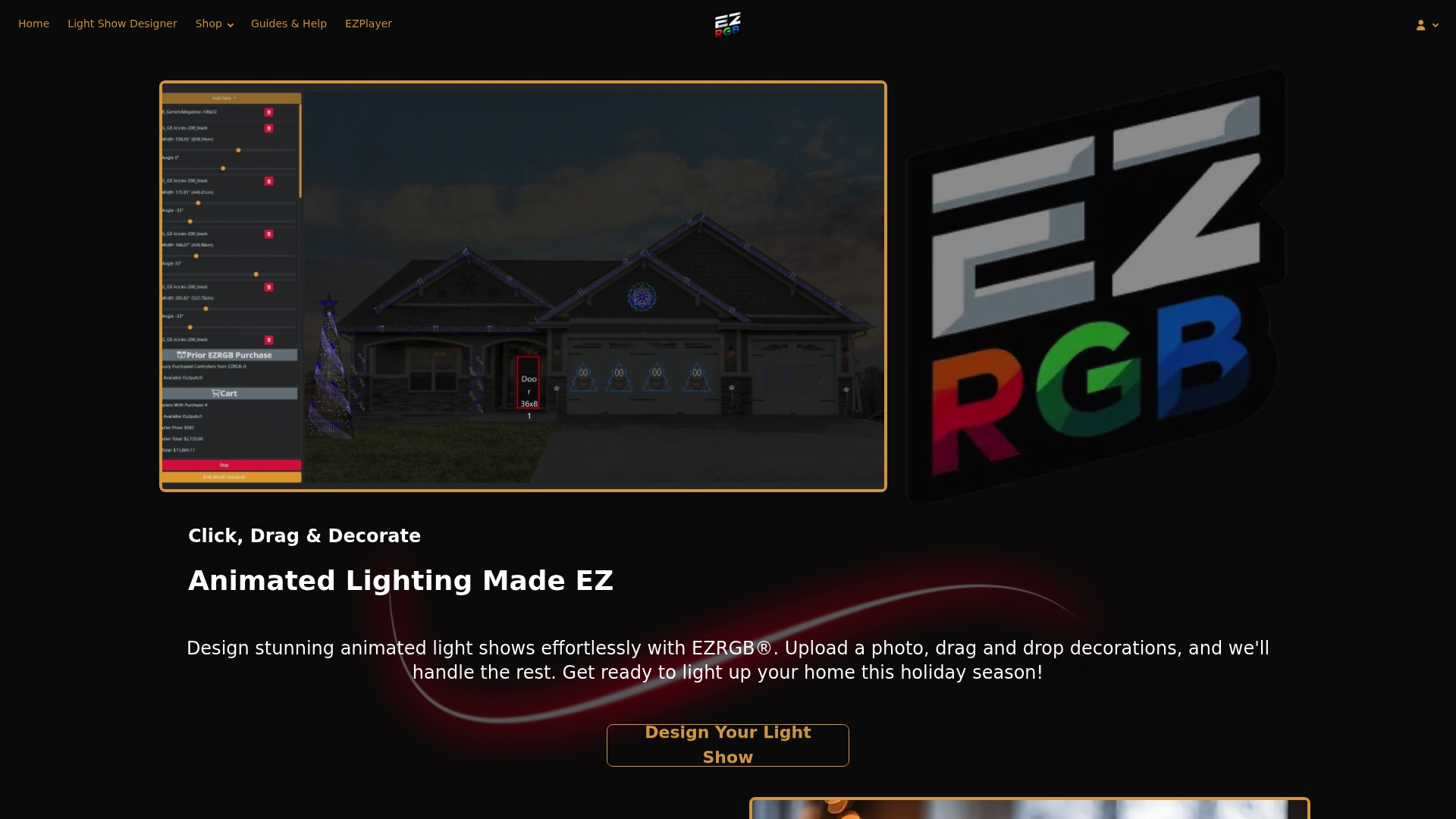
Ready to see what your property looks like with a synchronized animated display? Browse the Christmas Light Show Kit 1 for a complete turnkey starting point, or explore the full EZRGB platform to design your layout and request a demo. The guides and help library covers every step from first mockup to opening night.
Useful sources
The claims and figures in this article draw from the following sources. For permitting and AHJ requirements, consult your local authority directly or contact EZRGB for platform-specific questions.
| Source | Context |
|---|---|
| Journal of Environmental Psychology — workplace morale and holiday decor | Academic research on communal decor, sociability, and employee well-being |
| St. Nicks — commercial holiday planning lead times | Practitioner guidance on 6–9 month procurement and scheduling windows |
| St. Nicks — ROI of early planning | Case examples for dwell time, social engagement, and multi-season reuse ROI |
| Creative Displays — animated commercial displays | Industry case studies on animated lighting as destination marketing |
| Shinesall — mall atrium motif lights case study | Documented +34% footfall and 50,000+ Instagram posts from animated display |
| Blue Duck Christmas Lights — Indianapolis case study | Measured +27% foot traffic and +62% patio seating from professional lighting |
| Classic Displays — start planning early | Practitioner advice on creative lead time and equipment booking |
FAQ
Does putting up holiday decorations early actually make people happier?
Research cited by the Journal of Environmental Psychology shows communal holiday decor supports increased sociability and sustained employee well-being compared with non-decorated environments, suggesting earlier displays can extend those positive effects across more of the season.
What do psychologists say about early holiday decorating at work?
Psychologists note that inclusive, communal holiday displays support positive workplace culture and serve as meaningful year-end rituals, provided the design is welcoming to all staff rather than tied to a single religious tradition.
How early should a business start planning its holiday display?
Industry practitioners recommend starting 6–9 months before your target installation date to secure inventory, lock standard freight rates, and complete permit and AHJ approvals without timeline pressure.
How does animated lighting improve the business case for holiday displays?
Animated lighting turns a static display into a scheduled destination event, driving repeat visits and social sharing that static string lights cannot generate. EZRGB’s EZSequence and EZPlayer let you program and update shows remotely, so the creative stays fresh all season without additional hardware.
What KPIs should I track to measure a holiday display’s ROI?
Track footfall count, average dwell time, conversion rate during display hours, social tags and shares, and employee engagement scores. Compare each metric against the same period from the prior year to isolate the display’s contribution.