
Why Color-Changing Lights Suit Holidays Year-Round

Color-changing RGB lights are defined as multi-channel LED systems capable of producing millions of distinct colors by mixing red, green, and blue light at variable intensities. These lights suit holidays better than any traditional single-color option because one set of fixtures covers every celebration on your calendar, from Christmas to Halloween to Independence Day, without a single bulb swap. RGB light sales surged 42% in 2023 to 12 million units, proving that homeowners are moving away from static strings toward dynamic, programmable displays. The shift is not a trend. It is a permanent change in how people decorate their homes.
Why color-changing lights suit holidays better than traditional options
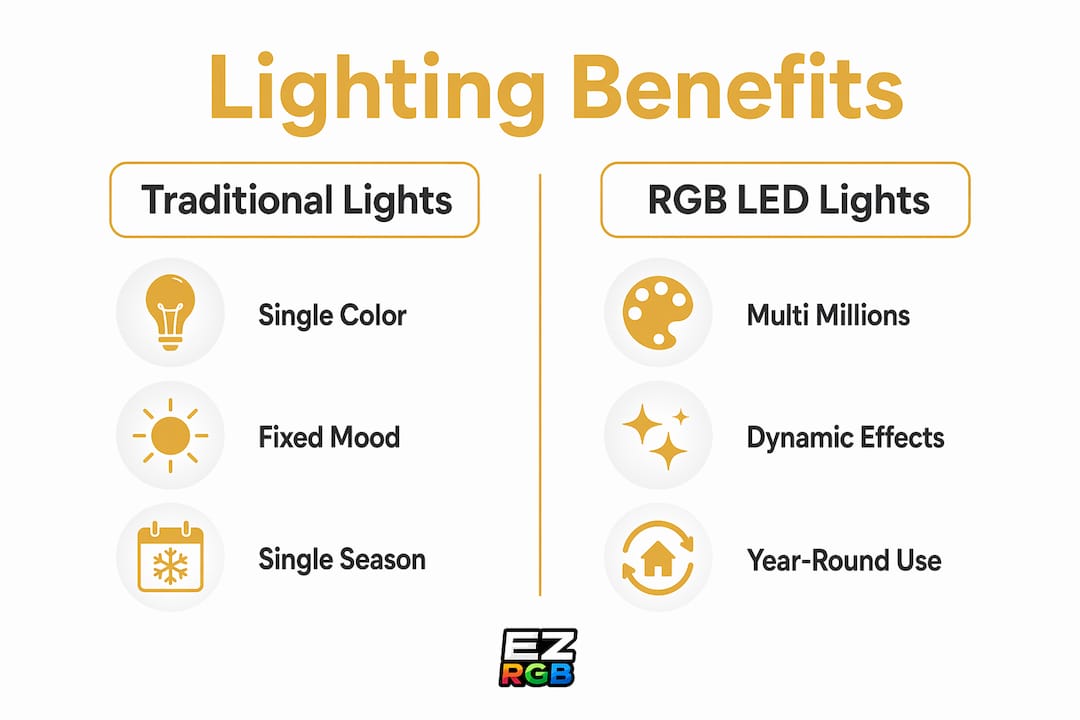
Traditional holiday lights lock you into one color, one mood, and one season. RGB lighting breaks that constraint entirely. A single installation can display cool white for a classic Christmas look, deep orange and purple for Halloween, red and pink for Valentine’s Day, and red, white, and blue for Independence Day, all from the same fixtures.
The core technical advantage is color depth. RGB systems mix three channels to produce a full spectrum, while traditional strings offer only the color they were manufactured in. That difference matters when you want your home to match a specific theme rather than settle for whatever the store had in stock.
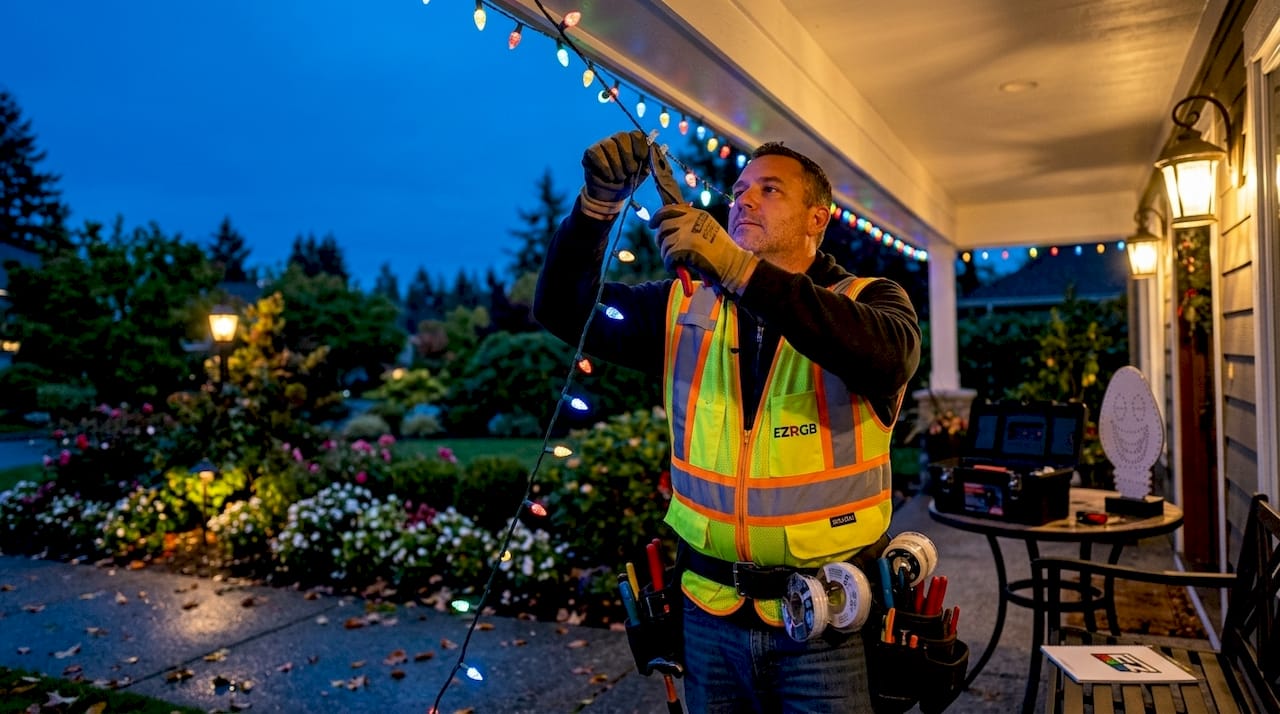
Animated effects add another layer of capability that static lights simply cannot match. Dynamic animations like fading, twinkling, and chasing create immersive environments that engage guests and family members in ways a steady glow never could. A Halloween display with a slow red pulse feels genuinely unsettling. A Christmas roofline with a synchronized snowfall chase effect feels cinematic.
Music synchronization takes the experience further. Web-controlled smart lights now serve 40% of consumers for holiday displays, up from 28% in 2023. That growth reflects how much homeowners value the ability to sync lighting to a playlist, set schedules, and switch themes from a phone without climbing a ladder.
Key advantages of RGB over traditional single-color lights:
-
Full color spectrum: Millions of colors from one set of fixtures, covering every holiday palette
-
Animated effects: Fading, chasing, twinkling, and strobing modes built into most controllers
-
Music sync: Real-time synchronization with audio through speakers or web-sync
-
Theme switching: Instant holiday changes without removing or replacing any hardware
-
Scheduling: Automated on/off and scene changes tied to time of day or calendar events
Pro Tip: When planning your first RGB installation, map out which holidays you celebrate most and confirm your chosen system supports those specific color combinations. Some entry-level controllers limit animation speed or color accuracy at lower price points.
Programmable scenes also create shared family experiences that static decorations cannot replicate. When your kids can pick a color theme for their birthday or request a specific animation for movie night, the lights become part of the celebration rather than just background decoration. Check out themed holiday lighting setups for concrete examples of how families use color-changing displays across multiple occasions throughout the year.
Here are four ways RGB lighting improves your home beyond the holiday season:
-
Architectural accent lighting: Subtle color washes along rooflines, columns, or garden beds give your home a polished, modern look on any night of the year.
-
Security lighting: Your property being better lit allows you to see what is in your yard.
-
Party and event ambiance: A backyard gathering shifts from casual to festive in seconds when you change the scene from warm white to vibrant color.
-
Curb appeal: Homes with permanent, well-placed RGB lighting consistently stand out in neighborhoods, creating a visual identity that neighbors and guests remember.
Color-changing lights contribute to healthier mood regulation by enabling controlled transitions from bright, energetic party scenes to calming light for evenings. That flexibility makes RGB lighting a genuine home comfort tool, not just seasonal décor.
What are the practical benefits of RGB lighting for cost and energy?
The upfront cost of RGB systems is higher than a box of traditional string lights. The long-term math, however, favors RGB decisively. LED holiday lights consume about 12% of the electricity that traditional incandescent strings use. Over a full holiday season, that difference shows up clearly on your electric bill.
Permanent RGB installations eliminate the annual cost of buying new lights, storing old ones, and spending weekends on a ladder. Permanent systems reduce risks of ladder work and recurring setup chores, which matters most for homeowners with two-story rooflines or complex architectural features. One installation, done correctly, serves you for 10–15 years.
| Factor | Traditional lights | RGB LED systems |
|---|---|---|
| Energy use | High (incandescent baseline) | About 12% of incandescent use |
| Annual setup cost | Recurring labor and replacement | One-time installation |
| Color options | Fixed at manufacture | Millions, app-controlled |
| Lifespan | 1–3 seasons typical | 10–15 years |
| Theme flexibility | Requires purchasing new sets | Instant app-based switching |
Web control also eliminates the cost of forgetting to turn lights off. Scheduled on/off times mean you never run lights at 3:00 AM by accident. Permanent RGB lighting acts as exterior infrastructure, offering layered control from subtle architectural lighting to vivid animated holiday displays without physical reinstallation each season.
Pro Tip: For long RGB pixel runs, plan your power injection points before installation. Color accuracy can drift toward warm or cool tones at the far end of a long string if the power supply is undersized. Proper power distribution keeps every pixel consistent from the first to the last.
What misconceptions exist about color-changing holiday lights?
The most common misconception is that RGB lights are only for Christmas or large-scale commercial displays. RGB lighting works equally well for Diwali, Hanukkah, Mardi Gras, Easter, and any personal celebration you want to mark with light. The main driver for RGB adoption is versatility: instant, theme-based color changes for multiple holidays and occasions without any physical changes to the installation.
A second myth is that these systems require technical expertise to install and operate. Many modern RGB systems are plug-and-play, with pre-configured effects and web-based controls that require no programming knowledge. EZRGB, for example, lets you upload a photo of your home, drag and drop decoration elements, and sync the result to music without writing a single line of code. That is a realistic entry point for any homeowner, not just tech enthusiasts.
Common misconceptions and the facts that correct them:
-
“RGB lights look garish.” Fact: RGB systems produce warm white, soft amber, and pastel tones just as easily as vivid primaries. The aesthetic is entirely in your hands.
-
“Installation is complicated.” Fact: Plug-and-play pixel strings and pre-loaded controllers make basic setups achievable in an afternoon.
-
“They only work for Christmas.” Fact: One installation covers every holiday on your calendar through app-based theme switching.
-
“They are too expensive.” Fact: The energy savings and elimination of annual replacement costs make RGB systems cost-competitive within two to three seasons.
When choosing a system, prioritize three factors: color accuracy across the full spectrum, app compatibility with your phone’s operating system, and the control range your home’s size requires. Also consider your home’s architecture. A flat roofline suits pixel strips differently than a Victorian with multiple gables. Lighting placement best practices can help you plan a layout that works with your home’s specific shape.
Key Takeaways
Color-changing RGB lights suit holidays because they replace an entire collection of single-use seasonal sets with one permanent, app-controlled system that covers every celebration at a fraction of the long-term cost.
| Point | Details |
|---|---|
| Versatility across holidays | One RGB installation covers Christmas, Halloween, Independence Day, and more via app-based theme switching. |
| Energy savings | LED RGB systems use about 12% of the electricity traditional incandescent strings consume. |
| Long-term value | A permanent installation lasts 10–15 years and eliminates annual setup labor and replacement costs. |
| Mood and ambiance | Scheduled light scenes support circadian health and create shared family experiences year-round. |
| Low barrier to entry | Plug-and-play systems and intuitive online webpage make RGB lighting accessible without technical expertise. |
What we have learned from watching homeowners make the switch
The homeowners who get the most out of RGB lighting are not the ones with the biggest budgets. They are the ones who stop thinking of holiday lights as seasonal decorations and start treating them as permanent home infrastructure. That mental shift changes everything about how you plan, install, and use the system.
We have seen homeowners who spent years dreading the annual ladder ritual finally install a permanent pixel roofline and report that the first holiday season felt like a genuine relief. The safety benefit alone, eliminating three or four trips up a 20-foot ladder in December wind, is worth the investment for many families. The creative freedom is the bonus they did not expect.
The other pattern we notice is that people underestimate how much they will use the lights outside of major holidays. A soft blue wash on a rainy evening, a warm amber glow for a dinner party, a green and gold scene for a football game. RGB lighting becomes part of how a home feels, not just how it looks in December. That year-round utility is what separates a good investment from a great one.
The technology has also matured to the point where the gap between “beginner” and “professional” results is smaller than most people assume. With the right system and a clear placement plan, a first-time installer can produce a display that looks like it was designed by a professional lighting company. The benefits of animated holiday lighting go well beyond aesthetics once you experience them firsthand.
— EZRGB Team
EZRGB makes professional RGB displays achievable at home
EZRGB gives you a direct path from “I want color-changing lights” to a finished, animated display without the technical barriers that stop most homeowners.

The EZRGB platform lets you upload a photo of your home and design your display visually before buying a single product. The Singing Light Bulb 46" delivers music-synchronized animation that works straight out of the box, with no programming required. For rooflines and architectural runs, the C9 RGB pixel strings give you vibrant, individually addressable color across every foot of your display. Both products connect to the EZRGB app, so switching from a Christmas theme to a New Year’s Eve scene takes seconds. If you are ready to move from single-color strings to a system that works for every holiday, EZRGB is the place to start.
FAQ
Why do color-changing lights work better for multiple holidays?
RGB lights produce millions of colors from one set of fixtures, so you switch themes through an app rather than buying new lights for each holiday. One installation covers Christmas, Halloween, Independence Day, and any other celebration you want to mark.
Are RGB holiday lights energy efficient?
LED RGB lights consume about 12% of the electricity traditional incandescent strings use, making them significantly cheaper to run across a full holiday season.
Do you need technical skills to install RGB holiday lights?
Most modern RGB systems are plug-and-play, with app-based controls and pre-loaded effects that require no programming knowledge. Platforms like EZRGB let you design and control your display visually without any technical background.
Can color-changing lights stay up all year?
Permanent RGB installations are designed for year-round use, serving as architectural accent lighting, security lighting, and event ambiance outside of holiday seasons, all controlled from a smartphone app.
How long do RGB LED holiday lights last?
Quality RGB LED systems typically last 10–15 years, eliminating the annual cost of replacing traditional string lights and reducing the labor of seasonal setup and removal.