
Beginner-Friendly Holiday Lighting Options for Families
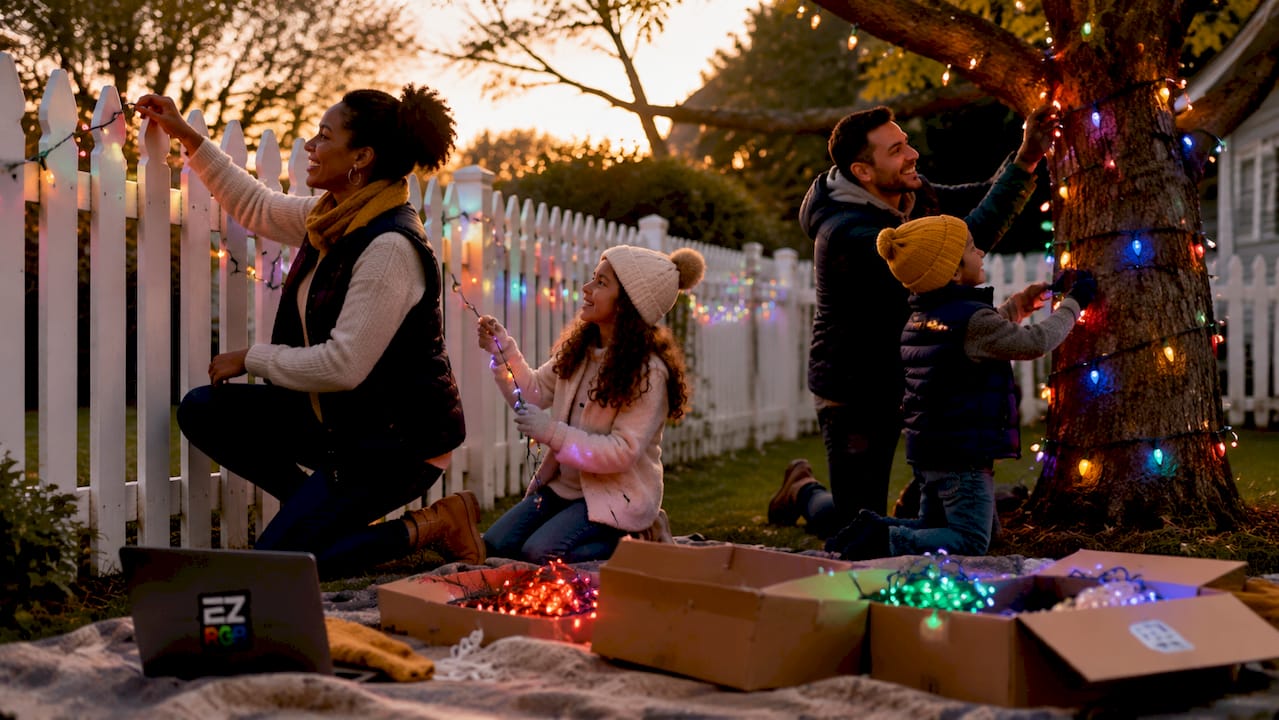
Beginner-friendly holiday lighting options are defined by three qualities: easy installation, low energy use, and weather durability. LED string lights, solar-powered displays, and clip-on gutter hooks all meet that standard without requiring any technical knowledge. The right setup lets your home look great from the street while keeping your electricity bill low and your weekend free. This guide covers the best light types, safe hanging methods, and smart features that make festive decorating simple for any homeowner or family.
1. What are the best beginner-friendly holiday lighting types?
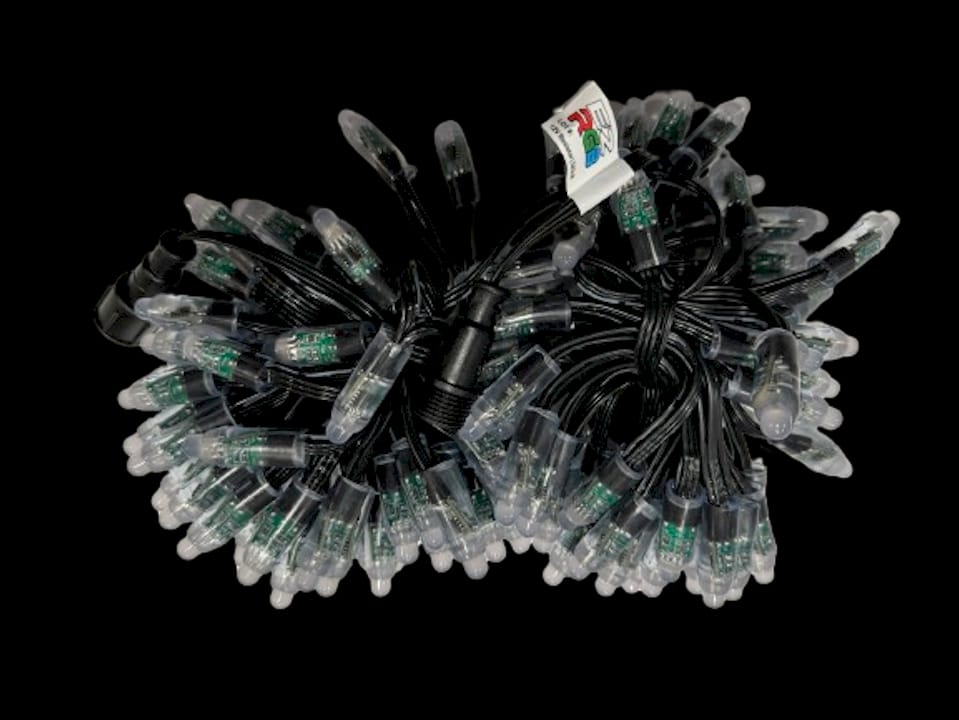
LED string lights are the top choice for beginners. They use 85–90% less electricity than traditional incandescent bulbs, costing roughly $1.37 per month to run a 10-strip display. That compares to $25–$34 per month for incandescent strings. The savings alone make LEDs the practical default for any family decorating on a budget.
Here are the main light types worth knowing:
-
LED string lights: Each bulb draws approximately 0.07 watts. They last 20–25 years and pay for themselves within 1–2 holiday seasons through energy savings alone.
-
Miniature lights: Affordable upfront and widely available. Less durable than full-size LEDs, but fine for indoor use or short seasonal runs.
-
C7/C9 incandescent bulbs: Traditional and bright, but each bulb draws 5–7 watts. Running a full display gets expensive fast.
-
Net lights: Pre-shaped grids that drape over bushes or hedges in seconds. No untangling required. A strong pick for families with limited setup time.
-
Rope lights: Flexible, easy to shape around railings or windows, and available in LED versions for efficiency.
Look for the ENERGY STAR® certification label when shopping. ENERGY STAR®-certified LED strings are independently tested for energy performance, giving you a reliable baseline without needing to read technical specs.
2. Safe and damage-free hanging methods for beginners
Hanging lights without damaging your home is one of the most common concerns for first-time decorators. The good news: six nail-free methods work well for most homes, and none of them require tools or special skills.
-
Clip-on gutter hooks: These snap onto the lip of your gutter and hold light strings at even intervals. They create a neat, professional look without any drilling or damage.
-
Outdoor adhesive hooks: Stick directly to siding, trim, or fascia. Best for smooth, painted surfaces in mild climates.
-
Shingle clips: Slide under roof shingles and hold C7 or C9 bulbs along the roofline. No nails, no holes.
-
Magnetic clips: Attach to metal gutters or trim instantly. Ideal for homes with metal fascia or steel garage doors.
-
Tension rod systems: Span across window frames or doorways to suspend curtain lights without touching the wall.
-
Hot glue systems: Work on brick or stone surfaces where adhesive hooks won’t bond. Use a low-temperature glue gun for easier removal later. (Must be commercial grade)
Choose your method based on surface type and how long the lights will stay up. Smooth painted wood works well with adhesive hooks. Gutters are best served by clip-on or magnetic options.
Pro Tip: Install adhesive hooks only when the temperature is above 60°F. Cold surfaces prevent the adhesive from bonding properly, and the hooks will peel off within days.
For textured surfaces like stucco or rough brick, mounting brackets every 1–2 lights adds long-term stability. This small extra step prevents sagging and keeps your display looking sharp through wind and rain.
3. Energy-saving features that make decorating easier
The right features cut your operating costs and remove the daily hassle of turning lights on and off. ENERGY STAR®-certified LEDs are the foundation, but a few additions make the whole system work without effort.
-
Smart plugs: Plug into any outdoor outlet and connect to your phone. Set a schedule once and the lights run automatically every night.
-
Programmable timers: Mechanical or digital timers cost under $15 and handle on/off cycles without any app required. A solid choice for families who prefer simple setups.
-
Solar-powered lights: Solar LED holiday lights run 8–12 hours on a full charge. They work well for locations far from outdoor outlets, like garden paths or backyard trees.
-
Motion-sensor outlets: Turn lights on only when someone is nearby. Useful for side yards or back porches that don’t need to run all night.
Combining ENERGY STAR®-certified bulbs with a timer or smart plug is the most cost-effective setup for most families. You get the $1.37-per-month operating cost of LEDs plus zero wasted runtime. That combination handles itself once you set it up.
4. Choosing the right setup for your home type
Not every home needs the same approach. Your roof height, surface material, and outlet placement all affect which setup works best. The table below matches common home types to the most practical lighting solutions.
| Home type | Best light option | Recommended hanging method | Ease of setup |
|---|---|---|---|
| Single-story house | LED string lights or C9 pixels | Gutter clips or shingle clips | Very easy |
| Two-story house | Net lights on shrubs, string lights on lower roofline | Gutter clips | Easy |
| Apartment balcony | Curtain lights or rope lights | Tension rods or adhesive hooks | Very easy |
| Townhouse | Mini string lights along railings | Adhesive hooks or magnetic clips | Easy |
| Home with brick exterior | LED rope lights or permanent strips | Hot glue or mounting brackets | Moderate |
For single-story homes, durable and weather-resistant lights with a solid IP rating handle rain, snow, and freezing temperatures without failing mid-season. Check for an IP44 rating or higher on any light you plan to use outdoors.
Apartment renters benefit most from tension rod systems and adhesive hooks because both options leave zero marks. Curtain lights hung across a balcony railing create a strong visual effect with minimal hardware. Families in townhouses can line railings and steps with rope lights for a clean, contained display that doesn’t require roof access.
For homes with brick or stone, permanent adhesive light strips need extra support. Bracketed reinforcement and warm installation temperatures prevent peeling and sagging over a full season. Install on a dry day above 50°F and add a bracket every few feet on rough surfaces.
5. Holiday lighting terms beginners should know
A few key terms come up repeatedly when shopping for easy holiday lights. Knowing them saves time and prevents buying the wrong product.
IP rating stands for Ingress Protection. It tells you how well a light is sealed against water and dust. IP44 means the light handles splashing water from any direction. IP65 means it can handle a direct spray. (All light products at EZRGB meet IP65 or better) For outdoor use, IP44 is the minimum you mean accept.
Lumens measure brightness. More lumens means a brighter light. A single C9 LED bulb typically produces 25–50 lumens. String lights with higher lumen counts work better for rooflines and large trees.
Pixel lights are individually addressable LEDs. Each bulb can display a different color at the same time, which is what makes animated light shows possible. EZRGB’s C9 RGB pixel lights use this technology to create full-color animated displays that sync with music.
FSEQ file is the sequence file format used by light show controllers. You don’t need to create one manually. Platforms like EZRGB provide pre-built sequences that load directly onto your player. (If using EZPlayerthey will sync with your player insantly)
Warm white vs. cool white describes color temperature. Warm white (2700K–3000K) looks like traditional incandescent light. Cool white (5000K–6500K) looks crisp and modern. Neither is wrong. It comes down to the look you want. Currently all lights at EZRGB are cool white.
6. Reusable and long-lasting lighting solutions for families
Reusable holiday lighting solutions save families money and reduce waste over multiple seasons. LED lights are the clear leader here. LEDs last 20–25 years compared to 2–3 years for incandescent strings. Buying once and storing carefully means you won’t be replacing lights every season.
Proper storage extends the life of any light set. Wind strings loosely around a cardboard spool or a purpose-built reel to prevent tangling. Store in a dry location away from extreme heat or cold. Avoid crushing bulbs under heavy boxes.
Pixel light systems, like those offered by EZRGB, are built for repeated use over many years. The guides and help section at EZRGB covers storage, care, and seasonal setup so your investment lasts. Families who set up the same display year after year find that a well-stored pixel system goes up faster each season as you learn the layout.
Net lights are another strong reusable option. They fold flat, store compactly, and deploy in minutes over bushes or hedges. A single net light panel covers a standard 4-foot shrub with no measuring or spacing required.
Key takeaways
The most effective beginner holiday lighting setup combines ENERGY STAR®-certified LED lights, a damage-free hanging method matched to your surface type, and a timer or smart plug to automate daily operation.
| Point | Details |
|---|---|
| LED lights save the most money | LEDs cost roughly $1.37/month to run versus $25–$34 for incandescent strings. |
| Match hanging method to surface | Use gutter clips on gutters, adhesive hooks on smooth siding, and brackets on textured surfaces. |
| ENERGY STAR® certification matters | Look for the label to confirm independent testing for energy performance. |
| Timers eliminate daily effort | A programmable timer automates on/off cycles and prevents wasted runtime. |
| Pixel lights enable animated shows | Individually addressable LEDs let each bulb show a different color for complete control & music-synced displays. |
What we’ve learned from helping beginners get started
Starting with LED string lights is the right call for almost every first-time decorator. The energy savings are real, the installation is forgiving, and the results look good without any fine-tuning. We’ve seen homeowners go from a tangled box of old incandescent strings to a clean roofline display in under two hours using gutter clips and a basic timer.
The hanging method matters more than most people expect. Renters especially benefit from clip-on and adhesive options because they leave no trace. A few families we’ve worked with were surprised to find that clip-on gutter hooks produced a straighter, more professional-looking line than nailed hooks ever did.
Planning your light placement before you climb a ladder saves real time. Measure your roofline, count your outlets, and decide on your pattern while standing on the ground. That five-minute planning step prevents three trips up and down and EZRGB lets you do this for free with its designer.
Smart plugs and timers are the single upgrade that makes the biggest difference in daily experience. Setting a schedule once and forgetting about it is genuinely freeing during a busy holiday season. If you’re on the fence about adding one, don’t be. The cost is low and the convenience is immediate.
For families ready to go beyond static displays, pixel lights and a simple light show designer are more accessible than they look. The technology has caught up to the beginner’s comfort level.
— EZRGB Team
EZRGB makes animated holiday lighting accessible
EZRGB is built for homeowners who want impressive holiday displays without a technical learning curve. The light show designer lets you upload a photo of your home, drag and drop decorations onto it, pick a song, and get plug-and-play props shipped directly to your door. No coding, no complicated software, no prior experience needed.
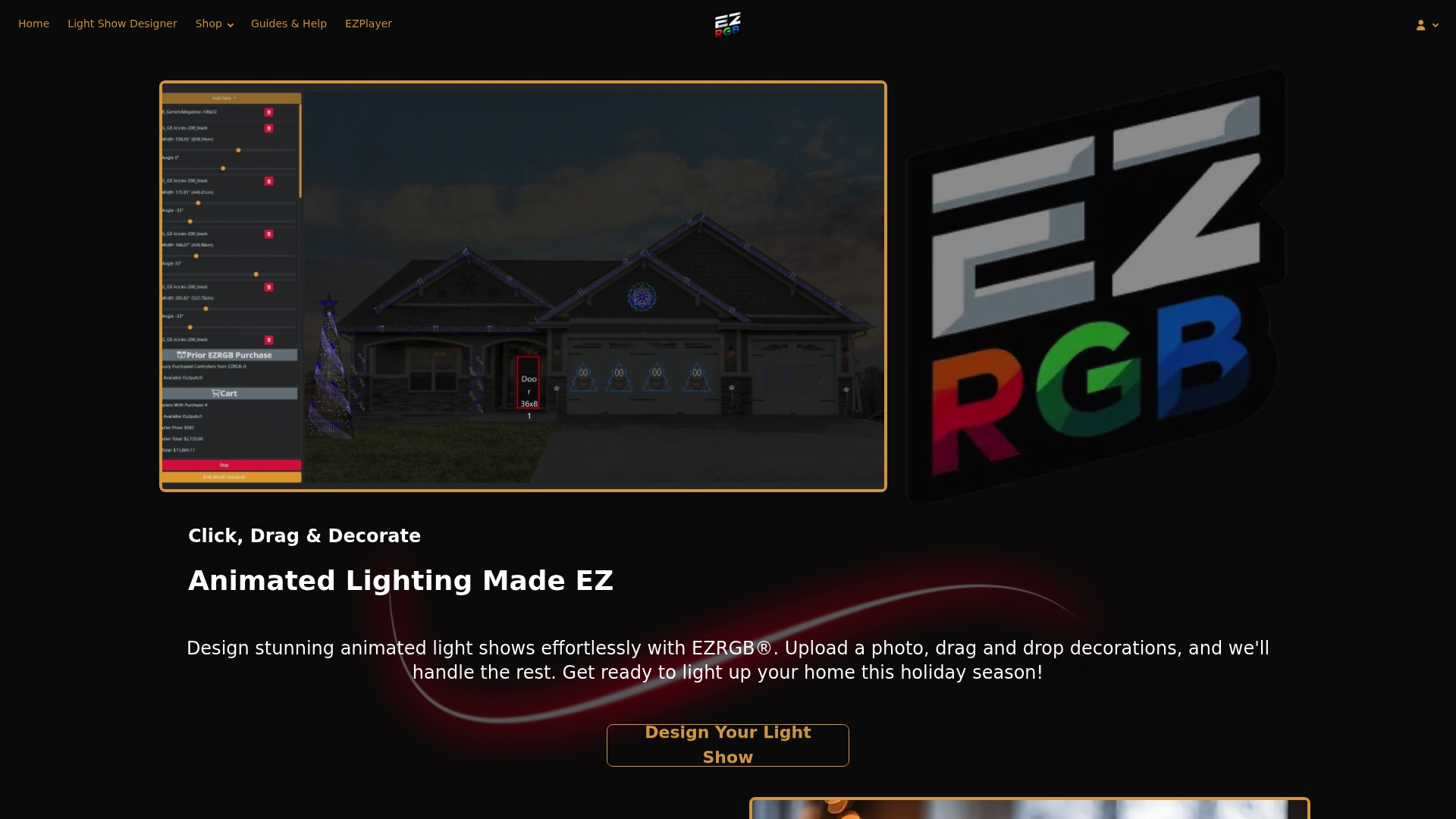
EZRGB’s pixel light kits include preinstalled pixels in the props and pre-built sequences, so your display is ready to run from day one. Themed options like the Andy Williams: Happy Holidays display give your home a polished, music-synced look that neighbors notice. Whether you’re setting up your first display or upgrading from basic string lights, EZRGB gives you the tools to do it confidently. Visit EZRGB.com to see the full range of kits and get started.
FAQ
What type of holiday lights are easiest for beginners?
LED string lights are the easiest starting point. They use minimal power, last for decades, and work with standard outdoor outlets and basic timers. If animated lights are desired, starting with kitsor props with lights preinstalled are an easy way to start.
How do I hang holiday lights without damaging my home?
Clip-on gutter hooks, adhesive hooks, and shingle clips all provide secure, damage-free attachment. Choose based on your surface type: clips for gutters, adhesive for smooth siding.
Are solar holiday lights reliable for outdoor use?
Solar LED holiday lights run 6–10 hours on a full charge and work well in locations without easy outlet access. Performance depends on daily sun exposure, so south-facing placements work best.
What does ENERGY STAR® mean for holiday lights?
ENERGY STAR® certification means the lights have been independently tested to meet energy efficiency standards. Certified LED strings use significantly less electricity than non-certified alternatives.
What are pixel lights and do beginners need them?
Pixel lights are individually addressable LEDs that can each display a different color, enabling animated and music-synced displays. Beginners wanting an animated lights show do need them. There is a big learning curve if you just try to start. There is certain equipment required, but platforms like EZRGB make them easy enough for anyone to use.