
Weather-Proof Outdoor Holiday Lighting: A 2026 Safety Guide
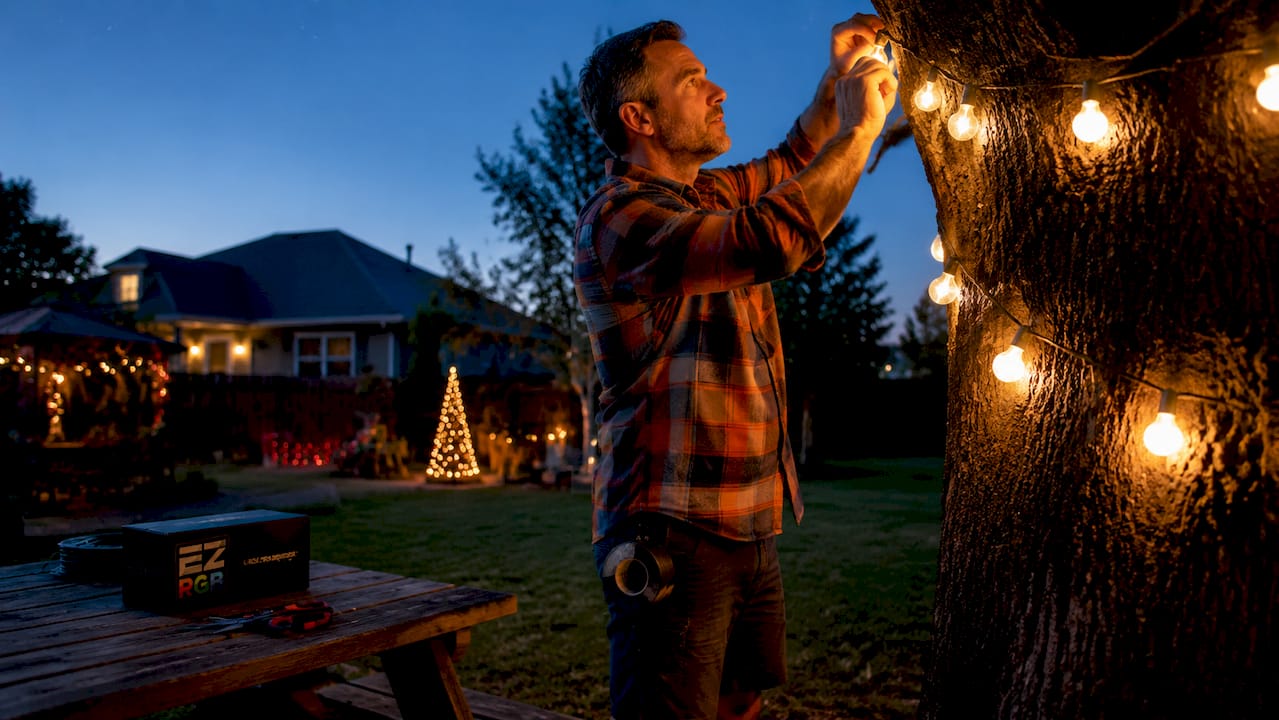
Weather-proof outdoor holiday lighting refers to lighting products and installation methods designed to withstand rain, snow, wind, and UV exposure without electrical hazards or performance failures. The industry standard term is “weatherproof lighting,” defined by IP (Ingress Protection) ratings and governed by the National Electrical Code (NEC). Getting this right protects your home, your investment, and your family. This guide covers IP ratings, electrical safety, connection protection, and product selection so your display stays bright and safe all season long.
What does weatherproof lighting mean for outdoor holiday lights?
Weatherproof lighting is rated using the IP system, a two-digit code that tells you exactly how well a product resists solid particles and water. The first digit covers dust protection; the second covers water. For outdoor holiday use, the water digit is what matters most.
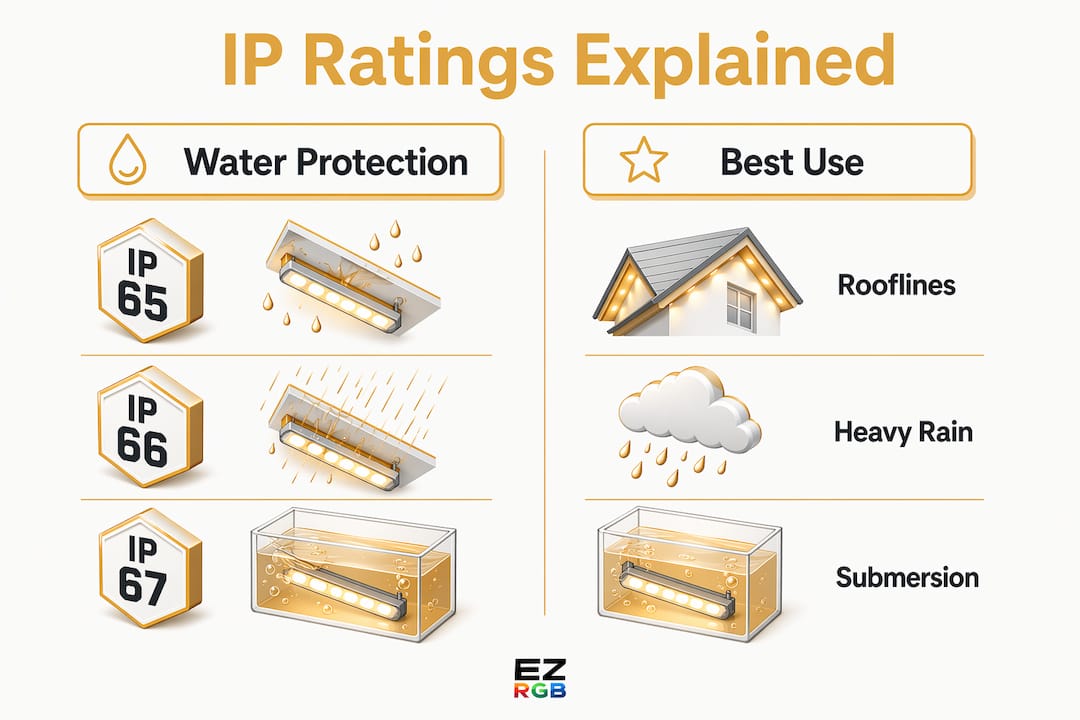
IP65, IP66, and IP67 are the three ratings you will encounter most often. Each one tells a different story about what the light can handle in real weather conditions.
| IP Rating | Water Protection Level | Best Use Case |
|---|---|---|
| IP65 | Resists low-pressure water jets from any direction | Rooflines, gutters, covered porches |
| IP66 | Resists high-pressure water jets | Open eaves, exposed facades |
| IP67 | Survives temporary immersion up to 1 meter | Ground-level runs, areas prone to pooling |
IP65 covers most residential roofline and gutter installations. IP67 is the right choice for lights that run along the ground or in areas where water pools after heavy rain. UV resistance is a separate consideration. Look for lights with UV-stabilized housing to prevent cracking and yellowing after a full season of sun exposure.
Pro Tip: Check the IP rating on the product packaging, not just the marketing description. “Weatherproof” without an IP number is a claim, not a standard.
How to power holiday lights safely outdoors
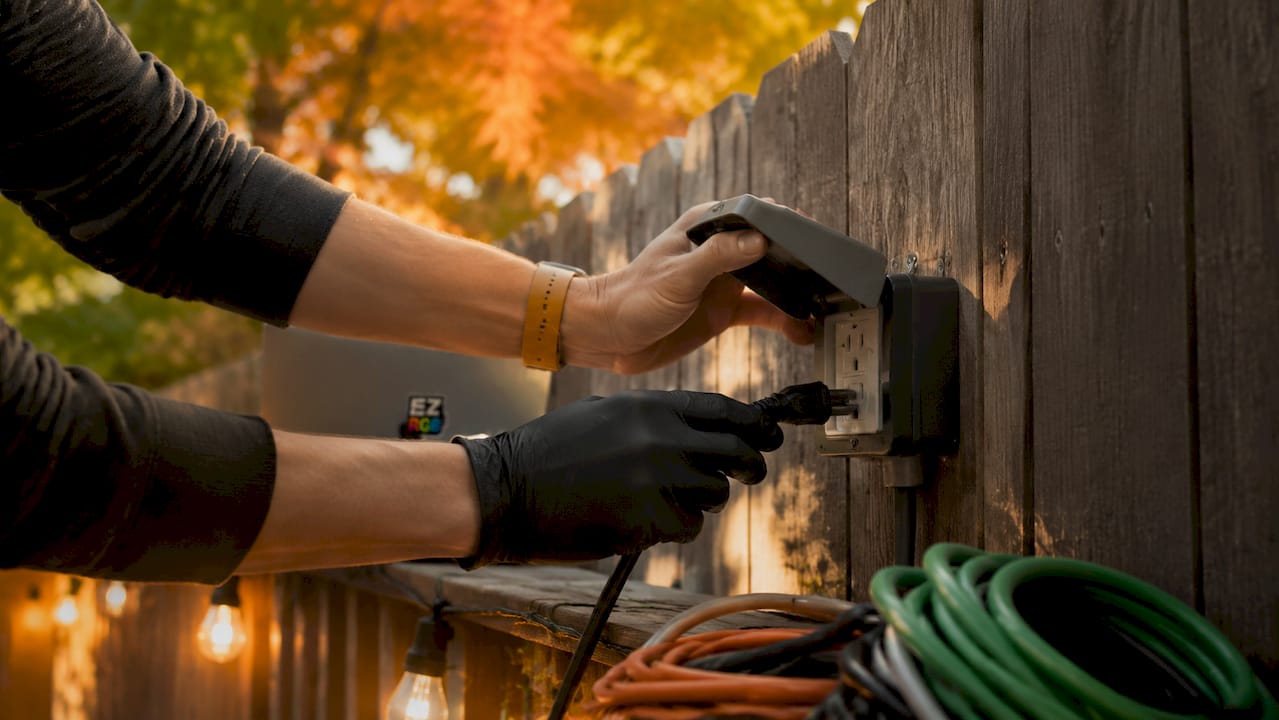
Electrical safety is the most critical part of any outdoor lighting setup. The National Electrical Code requires GFCI protection for all outdoor outlets used with holiday lights. A GFCI (Ground Fault Circuit Interrupter) outlet cuts power within milliseconds if it detects a current leak, preventing electric shock in wet conditions.
Standard household circuits typically support about 1,500–1,800 watts of load. LED string lights draw only 4–6 watts each, which means you can run far more strands on a single circuit than you could with older incandescent bulbs. That efficiency is a real advantage, but it does not eliminate the risk of overloading if you add too many decorations to one outlet.
Here are the core electrical safety rules every homeowner should follow:
-
Use GFCI outlets. Every outdoor outlet in your display must be GFCI-protected. Test the outlet before plugging in any lights.
-
Limit daisy chaining. Safe daisy chaining caps at 3–5 strands to prevent overheating and electrical failure. Check the manufacturer’s instructions for the specific strand limit.
-
Use outdoor-rated extension cords only. Indoor-rated cords used outdoors lack the heavy insulation needed to handle UV exposure and moisture. The cord jacket should be marked “W” or “Outdoor” to confirm it meets the standard.
-
Spread load across multiple outlets. Distributing decorations across circuits reduces overheating risk far more effectively than running everything from one source.
-
Inspect cords regularly. Check for fraying, cracking, or pinch points at least once a week during the display season.
One detail many homeowners miss: the outlet cover. A standard flip cover does not seal out moisture when a cord is plugged in. An in-use “bubble” cover seals the outlet fully even with a cord or timer connected. This is the only type of cover that meets weatherproof protection requirements during active use.
How to protect plugs, sockets, and connections from weather damage
Water ingress at connection points is the most common cause of light failure in wet weather. Protecting those connections is where most homeowners either win or lose the battle against weather damage.
Follow these steps to keep every connection dry and reliable:
-
Create a drip loop. A drip loop is a U-shaped slack formed in the cord just before it reaches the plug or outlet. Water runs down the cord, reaches the bottom of the U, and drips off before it can travel into the connection. This single technique prevents more failures than any other method.
-
Elevate plugs and connections. Never let a plug rest on the ground or in a puddle. Use cable clips or ground stakes to lift connections at least a few inches above soil level. Wet ground contact accelerates corrosion and creates shock risk.
-
Use hard-shell weatherproof connection covers. Weatherproof covers outperform electrical tape significantly. Tape absorbs moisture, loosens in cold temperatures, and leaves adhesive residue. A hard-shell cover snaps shut and creates a physical barrier that holds up through rain and freezing conditions.
-
Apply dielectric grease to bulb sockets. Dielectric grease creates a moisture barrier inside each socket, reducing corrosion and preventing the flickering that comes from oxidized contacts. A small dab per socket is all you need.
-
Cap unused sockets. Any empty socket on a light string is an open entry point for water. Use the rubber caps that come with the string, or purchase replacements if they are missing.
-
Inspect connections after every major storm. Wind and rain can shift cords, pull plugs partially out of covers, and deposit debris in sockets. A quick walk-through after bad weather catches problems before they become failures.
Pro Tip: Keep a small kit near your display with extra weatherproof covers, dielectric grease, and rubber socket caps. Repairs take two minutes when you have the right materials on hand.
For detailed guidance on maintaining your connections and extending product life, the EZRGB product care guides covers repair techniques specific to pixel lighting systems.
What are the best outdoor holiday lighting systems for durability?
Choosing between permanent and temporary lighting systems is the first decision that shapes everything else. Both have real advantages, and the right choice depends on your goals, budget, and how much time you want to spend on installation each year.
Permanent lighting systems stay up year-round and are designed for long-term outdoor exposure. They require a one-time installation effort but pay off in convenience and consistent appearance. Permanent lights require a long-term design approach that balances durability with home aesthetics. The main trade-off is cost and the need to plan your layout carefully from the start.
Temporary string lights offer flexibility. You can change colors, styles, and coverage area each season. The downside is that repeated installation and removal creates wear on connections and housing, which shortens product life if you are not careful.
Key factors to evaluate when choosing any outdoor holiday lighting system:
-
LED spacing. 4-inch LED spacing produces a dense, even look. 12-inch spacing can leave visible dark gaps on larger homes. Match your spacing to your roofline length and the visual effect you want.
-
IP rating. As covered earlier, match the rating to the exposure level of each installation zone.
-
Voltage. Low-voltage 12V systems like EZRGB’s C9 pixel strings reduce shock risk and are easier to manage safely in wet conditions.
-
Color capability. RGB pixel lights give you full color control and the ability to run animated sequences, which adds significant visual impact over single-color strings.
Maintenance practices that extend the life of any outdoor lighting system:
-
Store lights in sealed containers to prevent moisture and pest damage during the off-season.
-
Clean pigtail connection with a dry cloth before reinstalling. Dirt and debris trap moisture against the housing.
-
Replace any strand with damage prior reinstalling. Damage that looks minor in October becomes a water entry point by December.
-
For permanent systems, inspect mounting hardware annually. Clips and fasteners corrode over time and can allow lights to shift away from the roofline.
Key Takeaways
Weather-proof outdoor holiday lighting requires the right IP-rated products, GFCI-protected outlets, outdoor-rated cords, and physical connection protection at every plug and socket.
| Point | Details |
|---|---|
| IP ratings define protection levels | Choose IP65 for rooflines, IP67 for ground-level runs where water pools. EZRGB exceeds these rating with all the products being IP68 |
| GFCI outlets are required | The National Electrical Code mandates GFCI protection for all outdoor holiday light outlets. |
| Drip loops prevent most failures | A U-shaped cord slack before each plug stops water from running into connections. |
| Limit daisy chaining to 3–5 strands | Exceeding this limit risks overheating and electrical failure regardless of LED efficiency. |
| Hard-shell covers beat electrical tape | Weatherproof snap covers hold up through rain and freezing temperatures; tape does not. |
What we have learned from real outdoor lighting installs
After working with homeowners on hundreds of outdoor lighting setups, the pattern is clear. The displays that fail are almost never the result of bad products. They fail because of skipped steps at the connection level.
The most common mistake is treating weatherproofing as a product feature rather than an installation practice. You can buy IP67-rated lights and still end up with failures if you let the plug sit in a puddle. The light itself may be fine. The connection is where water wins.
The second mistake is underestimating circuit load. LED lights draw very little power individually, which creates a false sense of safety. Homeowners add more than one controller, then wonder why a breaker trips or a cord gets warm. Spreading your load across multiple GFCI outlets is not optional. It is the only way to run a large display safely.
Planning your layout before you buy anything saves real money and frustration. Measure your roofline, count your outlets, and calculate your total wattage before you order a single strand. A display that fits your home’s electrical capacity from the start is far more reliable than one that gets patched together season after season.
Safety shortcuts feel harmless until they are not. Prioritize elevating the connections, the in-use outlet cover, and the outdoor-rated cord every single time. Those three steps cost almost nothing and prevent the vast majority of outdoor lighting failures.
— EZRGB Team
How EZRGB makes your holiday lighting display easier
Planning and installing a weather-resistant holiday display takes real preparation. EZRGB makes the creative side of that process straightforward, so you can focus your energy on safe installation rather than figuring out what your display should look like.
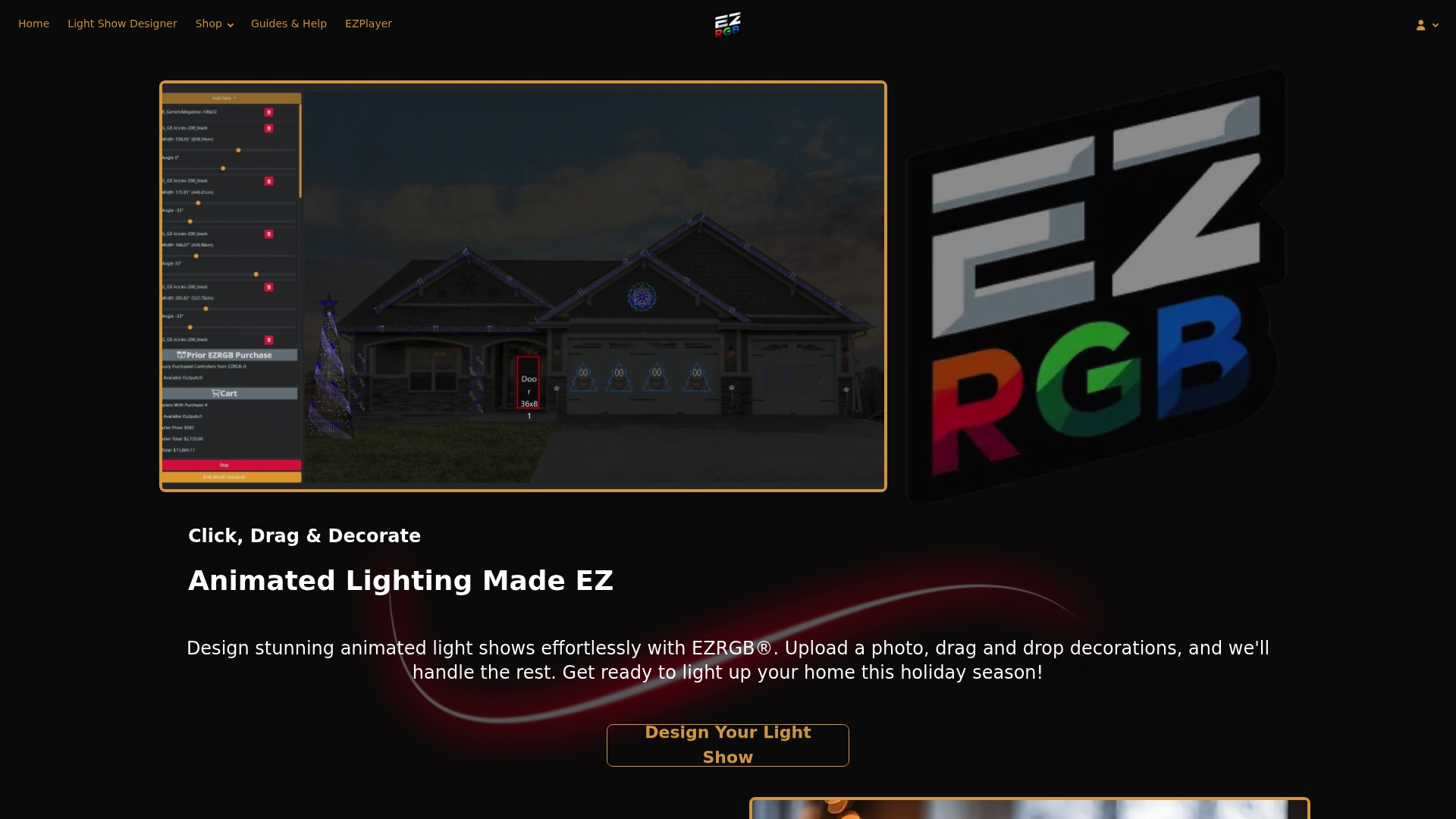
With EZRGB’s light show designer, you upload a photo of your home, drag and drop pixel lighting props onto your roofline and facade, and sync the whole display to music. No technical skills required. The platform ships preinstalled pixel props ready to connect, so your setup time drops significantly. EZRGB’s guides and help resources also cover installation best practices, product care, and troubleshooting to keep your display running reliably all season. When your safety setup is solid, a great-looking animated show is the natural next step.
FAQ
What does IP65 mean for outdoor Christmas lights?
IP65 means the light is protected against low-pressure water jets from any direction. This rating is sufficient for roofline and gutter installations in most residential climates.
How many strands of lights can I safely connect together?
Safe daisy chaining is typically limited to 1–2 strands(200 pixels max at reduce brightness) . Exceeding that limit risks overheating and electrical failure, regardless of how efficient the individual LEDs are.
Do I need a special outlet cover for outdoor holiday lights?
Yes. A standard flip cover does not seal when a cord is plugged in. You need an in-use “bubble” cover, which seals the outlet fully during active use and prevents moisture from entering the electrical connection.
What is a drip loop and why does it matter?
A drip loop is a U-shaped slack formed in a cord just before it reaches a plug or outlet. Water runs down the cord, drips off at the bottom of the loop, and cannot travel into the connection point.
Can I use an indoor extension cord for outdoor holiday lights?
No. Indoor-rated extension cords lack the heavy insulation required for UV and moisture exposure. Only cords marked “W” or “Outdoor” are rated for safe use in wet or exposed outdoor environments.